Craft
Why Chiniot Is Famous for Furniture: The City, the Wood and the Craft
Chiniot, on the Chenab river in Punjab, became Pakistan’s furniture capital through centuries of woodwork, Sheesham timber and family workshops. The short history, and what it means for a buyer today.
By Chiniot Furniture Galleria · · 2 min read
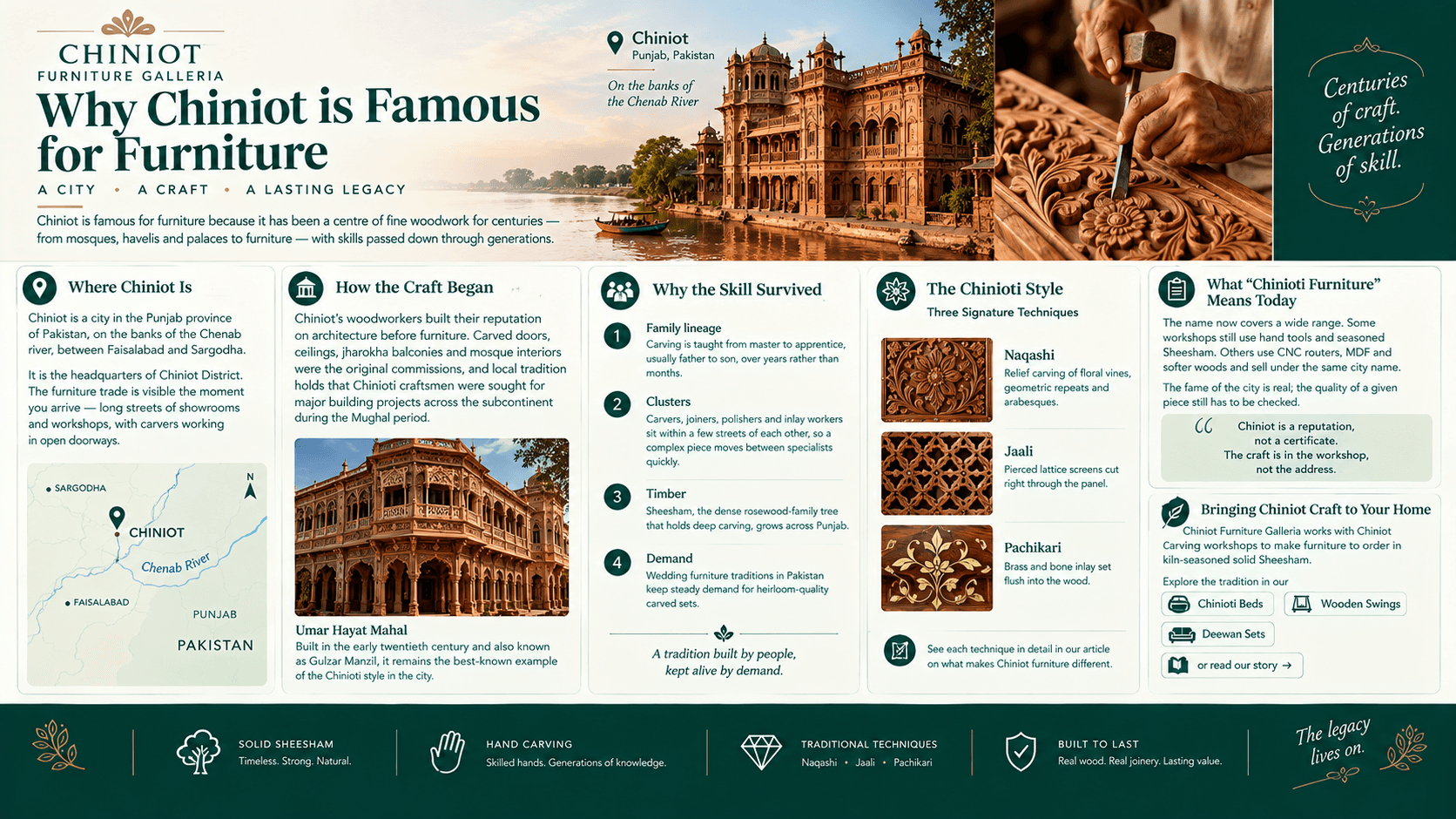
Short answer: Chiniot is famous for furniture because it has been a centre of fine woodwork for centuries — first for mosques, havelis and palaces, later for furniture — with skills passed down inside carving families. It sits in Punjab on the Chenab river, close to supplies of Sheesham timber, and today it has one of the largest concentrations of hand-carving workshops in Pakistan.
Where Chiniot is
Chiniot is a city in the Punjab province of Pakistan, on the banks of the Chenab river, between Faisalabad and Sargodha. It is the headquarters of Chiniot District. The furniture trade is visible the moment you arrive: long streets of showrooms and workshops, with carvers working in open doorways.
How the craft began
Chiniot's woodworkers built their reputation on architecture before furniture. Carved doors, ceilings, jharokha balconies and mosque interiors were the original commissions, and local tradition holds that Chinioti craftsmen were sought for major building projects across the subcontinent during the Mughal period.
The city's own landmarks show the standard. Umar Hayat Mahal, built in the early twentieth century and also known as Gulzar Manzil, is celebrated for its intricate carved woodwork, and it remains the best-known example of the Chinioti style in the city.
Why the skill survived
- Family lineage. Carving is taught from master to apprentice, usually father to son, over years rather than months.
- Clusters. Carvers, joiners, polishers and inlay workers sit within a few streets of each other, so a complex piece moves between specialists quickly.
- Timber. Sheesham, the dense rosewood-family tree that holds deep carving, grows across Punjab.
- Demand. Wedding furniture traditions in Pakistan keep steady demand for heirloom-quality carved sets.
The Chinioti style in three techniques
- Naqashi — relief carving of floral vines, geometric repeats and arabesques
- Jaali — pierced lattice screens cut right through the panel
- Pachikari — brass and bone inlay set flush into the wood
Our article on what makes Chiniot furniture different explains each technique and how to spot genuine hand work.
What "Chiniot furniture" means today
The name now covers a wide range. Some workshops still work entirely by hand in seasoned Sheesham. Others use CNC routers, MDF and softer woods and sell under the same city name. The fame of the city is real; the quality of a given piece still has to be checked.
Chiniot is a reputation, not a certificate. The craft is in the workshop, not the address.
Bringing Chiniot craft to your home
Chiniot Furniture Galleria works with Chiniot carving workshops to make furniture to order in kiln-seasoned solid Sheesham. Explore the tradition in our Chinioti beds, wooden swings and deewan sets, or read our story.
Frequently asked
- Why is Chiniot famous?
- Chiniot is famous for its centuries-old tradition of hand-carved woodwork and furniture. Its craftsmen first worked on carved doors, ceilings and buildings, and the city now has one of the largest concentrations of furniture carving workshops in Pakistan.
- Where is Chiniot located?
- Chiniot is a city in Punjab, Pakistan, on the Chenab river between Faisalabad and Sargodha. It is the headquarters of Chiniot District.
- What is the famous building in Chiniot known for woodwork?
- Umar Hayat Mahal, also known as Gulzar Manzil, is an early twentieth-century mansion in Chiniot celebrated for its intricate carved woodwork.
- What wood is used in Chiniot furniture?
- Traditional Chiniot furniture is made mainly from Sheesham (Dalbergia sissoo), a dense hardwood that holds deep carving. Some workshops also use deodar and walnut.
Keep reading
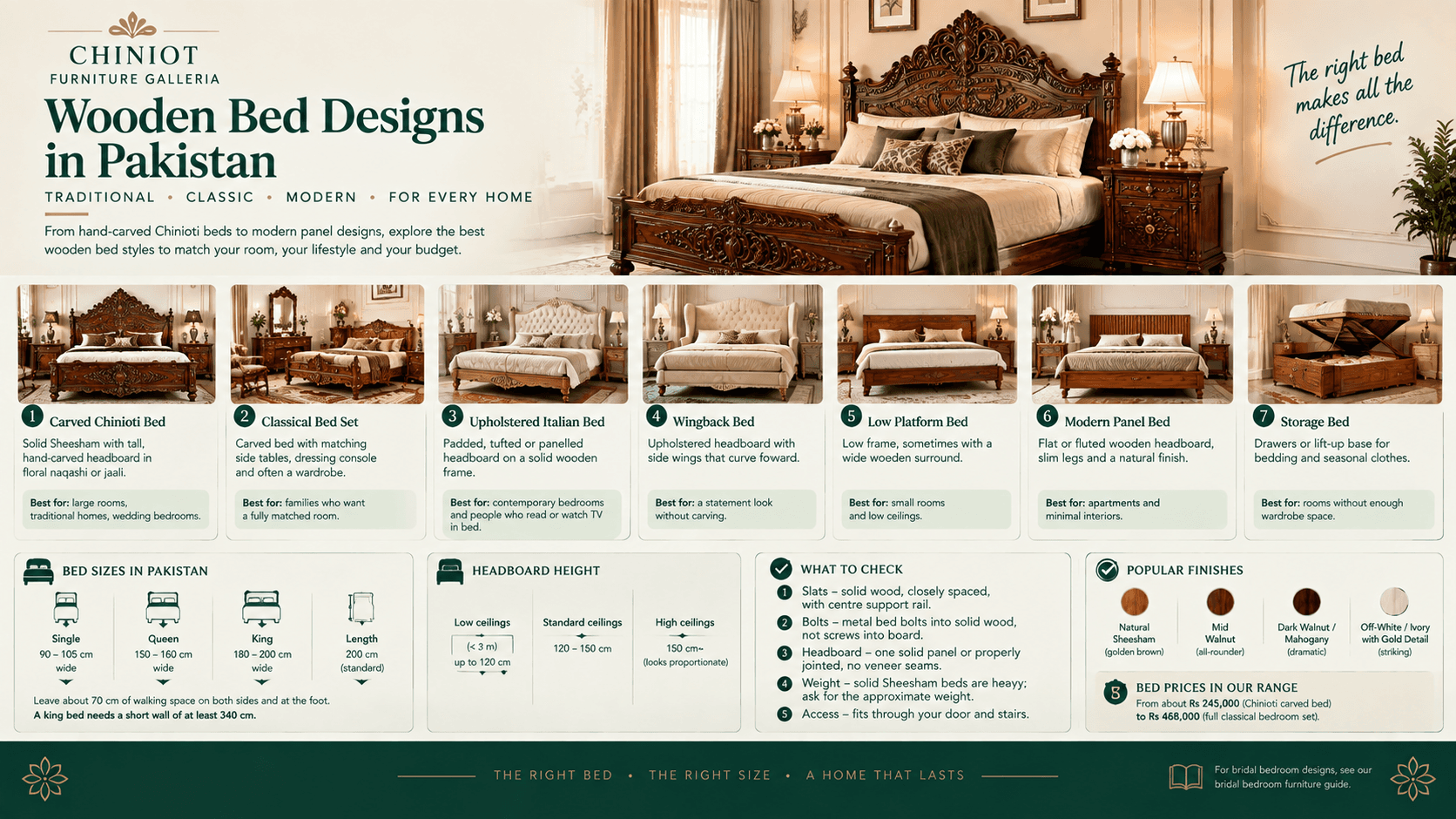
Wooden Bed Designs: Chinioti, Italian, Modern and Classical Styles Explained
Wooden bed designs for Pakistani bedrooms — carved Chinioti, classical, Italian upholstered, wingback, platform and modern — with bed sizes, headboard heights and how to choose.
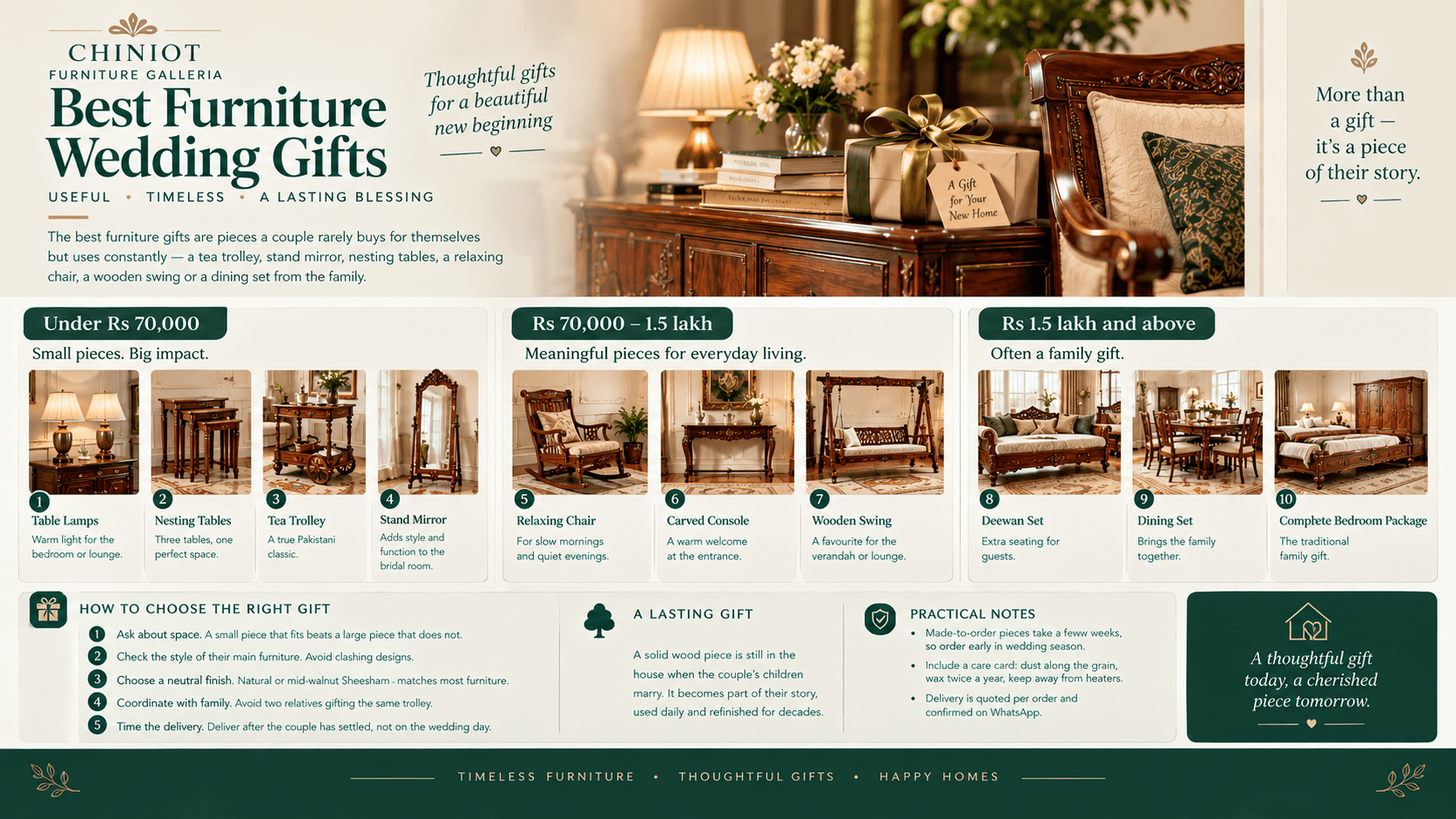
Furniture as a Wedding Gift: 10 Pieces That Are Actually Used
Ten wooden furniture wedding gift ideas for a couple, from Rs 38,000 table lamps to swings and dining sets — plus how to choose a piece that fits their home and style.
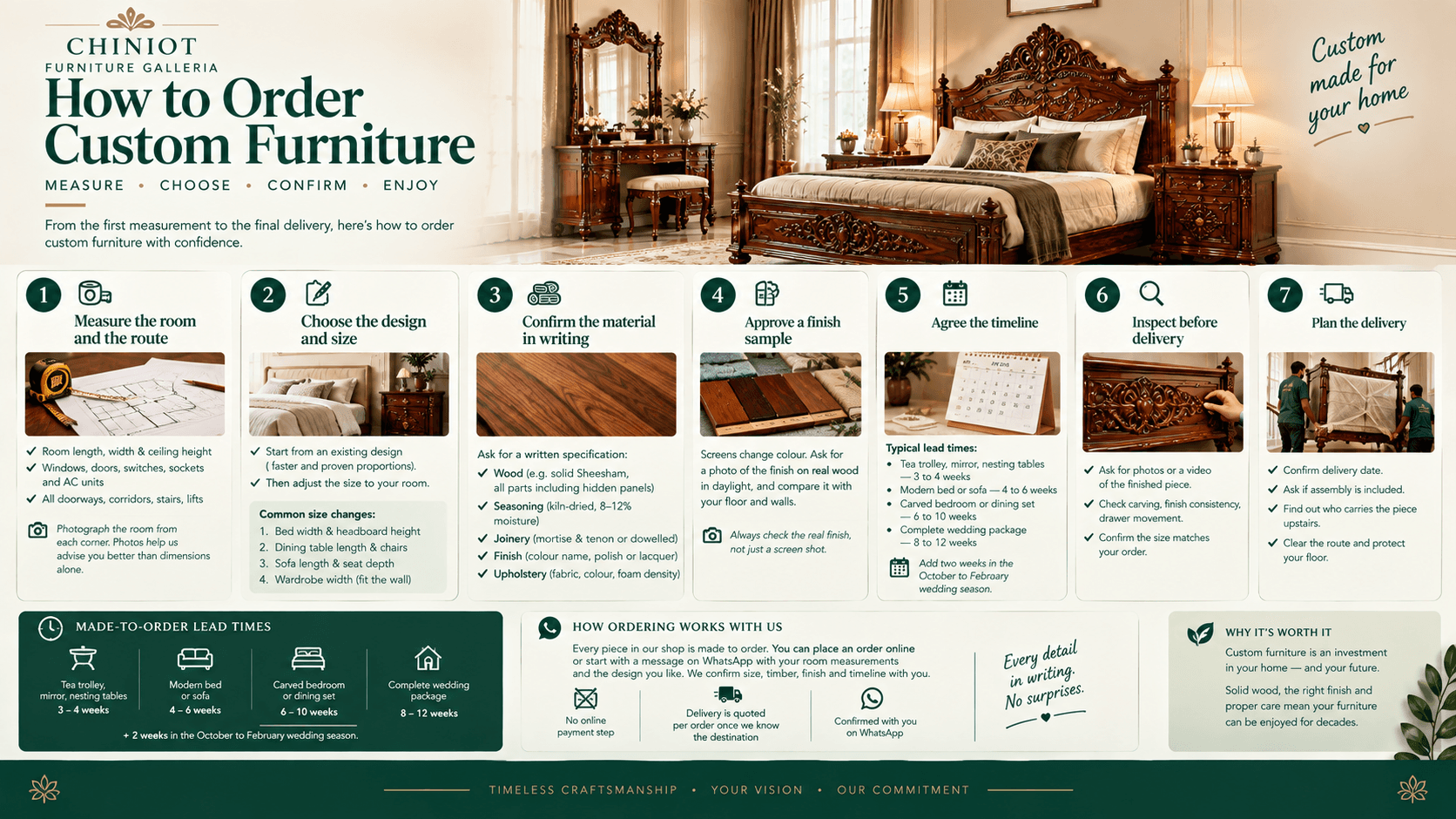
How to Order Custom Furniture in Pakistan: From Measurements to Delivery
A step-by-step guide to ordering made-to-order furniture — measuring, choosing wood and finish, approving the design, lead times, payment milestones, inspection and delivery.