Design
Furnishing a Small Apartment: Nine Pieces That Do Two Jobs
Nesting tables, deewans, tea trolleys and stand mirrors — the traditional pieces that solve modern apartment problems, and how to place them.
By Chiniot Furniture Galleria · · 3 min read
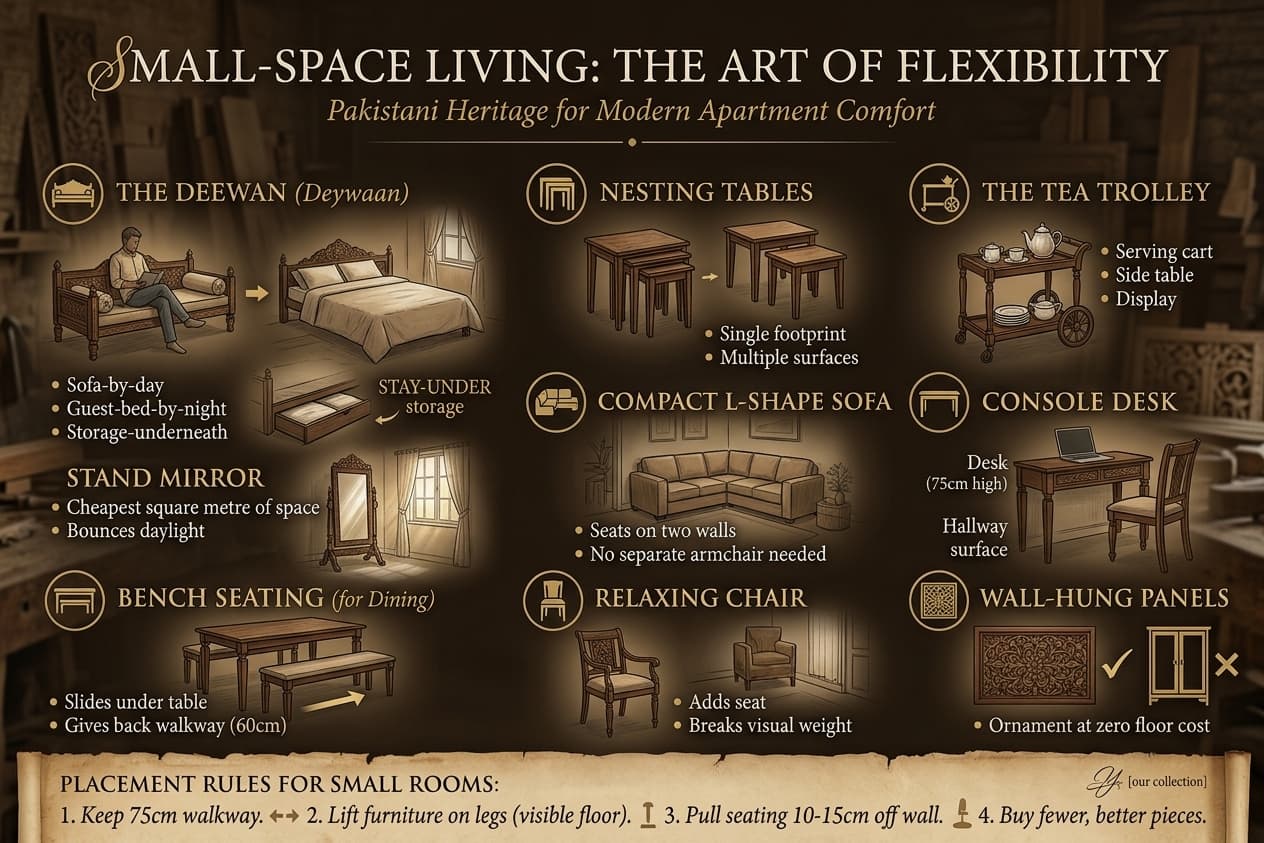
Apartment living punishes single-purpose furniture. The good news is that the traditional Pakistani repertoire is full of pieces that were designed for flexible rooms long before anyone used the phrase small-space living.
1. The deewan
Seating by day, a guest bed by night, and storage underneath in most builds. A deewan does the work of a sofa, a spare bed and a chest, which in a two-bedroom flat is the difference between hosting and not.
Place it against the longest uninterrupted wall and keep the coffee table light enough to move.
2. Nesting tables
A set of nesting tables is one footprint when closed and three surfaces when guests arrive. In a small lounge they beat a fixed coffee table outright, because the floor clears in five seconds.
3. The tea trolley
A tea trolley is a serving cart, a side table, and — parked against a wall — a display surface. On castors it moves out of the way instead of being worked around.
4. A stand mirror
A stand mirror is the cheapest square metre of apparent space you can buy. Placed opposite or perpendicular to a window it bounces daylight deep into the room. Carved jaali frames add the ornament a small room can afford, because a mirror occupies almost no visual weight.
5. A compact L-shape sofa
Covered fully in our L-shape guide: seats on two walls, one dead corner solved, no separate armchair needed.
6. A console that becomes a desk
A carved console at 75 cm high takes a chair and works as a desk, then returns to being a hallway or lounge surface. Choose one with real leg clearance, not a deep apron.
7. Bench seating at the dining table
Replacing chairs on one side with a bench lets the seating slide fully under the table, giving back 60 cm of walkway when the table is not in use — the single most effective change in a small dining area.
8. A relaxing chair instead of a second sofa
One good relaxing chair adds a seat without adding a wall of upholstery. It also breaks up the room visually, which matters when everything else is lined up along the perimeter.
9. A wall-hung carved panel instead of a cabinet
If the room needs character but not storage, a carved wall panel gives the ornament of a display cabinet at zero floor cost.
Placement rules for small rooms
- Keep 75 cm of walkway on the main route through the room. Everything else can be tighter.
- Lift the furniture. Pieces on visible legs show floor underneath and read lighter than
plinth-based ones, even at the same size.
- Do not push everything to the walls. Pulling seating 10 to 15 cm off the wall makes a small
room look intentional rather than cramped.
- Buy fewer, better pieces. Five well-proportioned pieces beat nine that fit.
Our whole home decor collection is built around exactly these double-duty pieces, made to order so a deewan or a console can be sized to the wall you actually have.
Frequently asked
- What furniture works best in a small apartment?
- Double-duty pieces: a deewan that serves as seating, guest bed and storage; nesting tables that collapse to one footprint; a tea trolley on castors; a stand mirror to bounce daylight; and a compact L-shape sofa that seats along two walls.
- How much walkway space does a small room need?
- Keep 75 cm clear on the main route through the room. Secondary paths can be tighter, and pulling seating 10 to 15 cm off the wall makes the layout read as intentional rather than cramped.
- Is a deewan a good alternative to a sofa?
- In a small flat, often yes. A deewan seats a group by day, converts to a guest bed at night, and most builds include storage underneath, replacing three pieces of furniture with one.
Keep reading
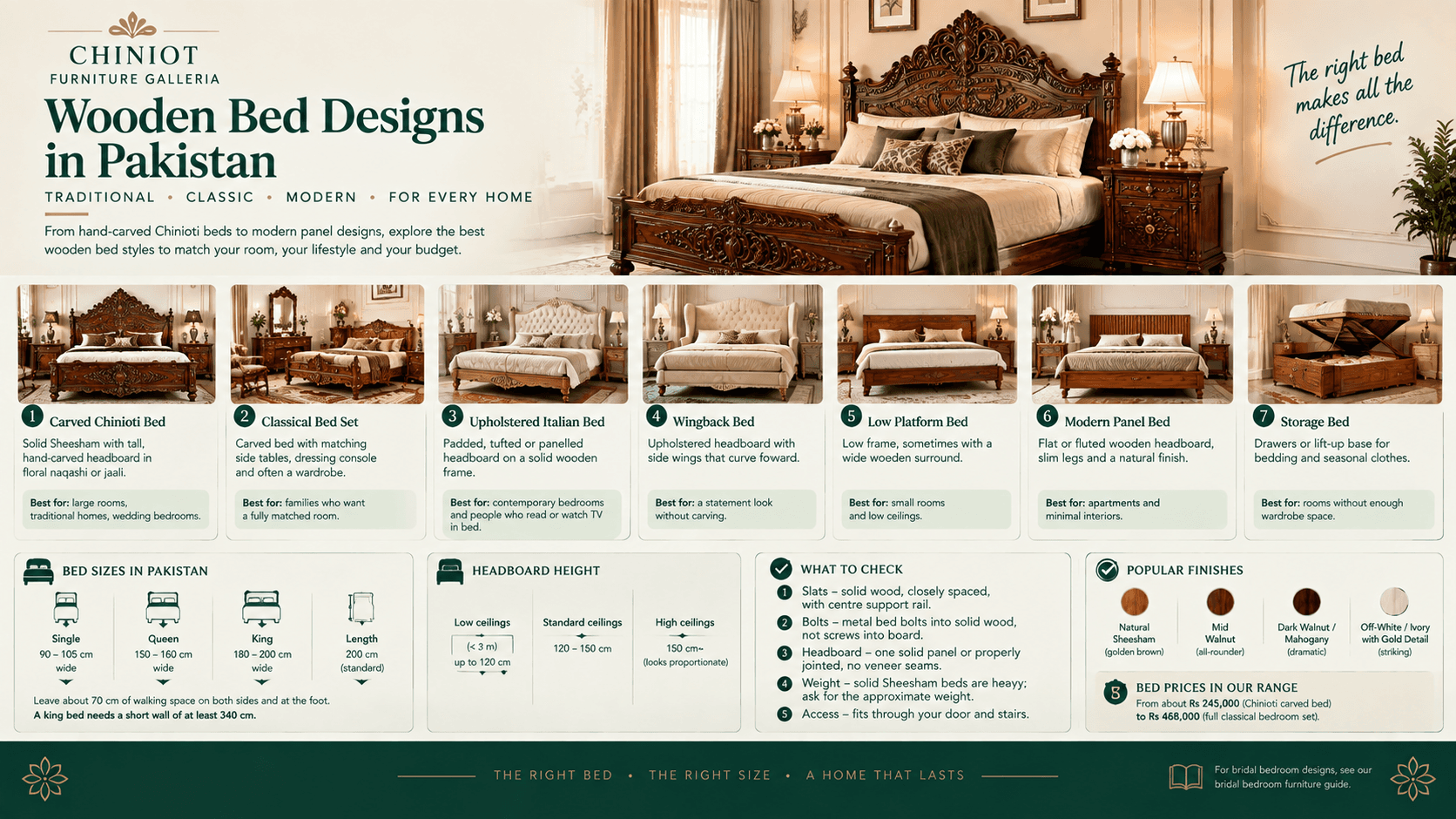
Wooden Bed Designs: Chinioti, Italian, Modern and Classical Styles Explained
Wooden bed designs for Pakistani bedrooms — carved Chinioti, classical, Italian upholstered, wingback, platform and modern — with bed sizes, headboard heights and how to choose.
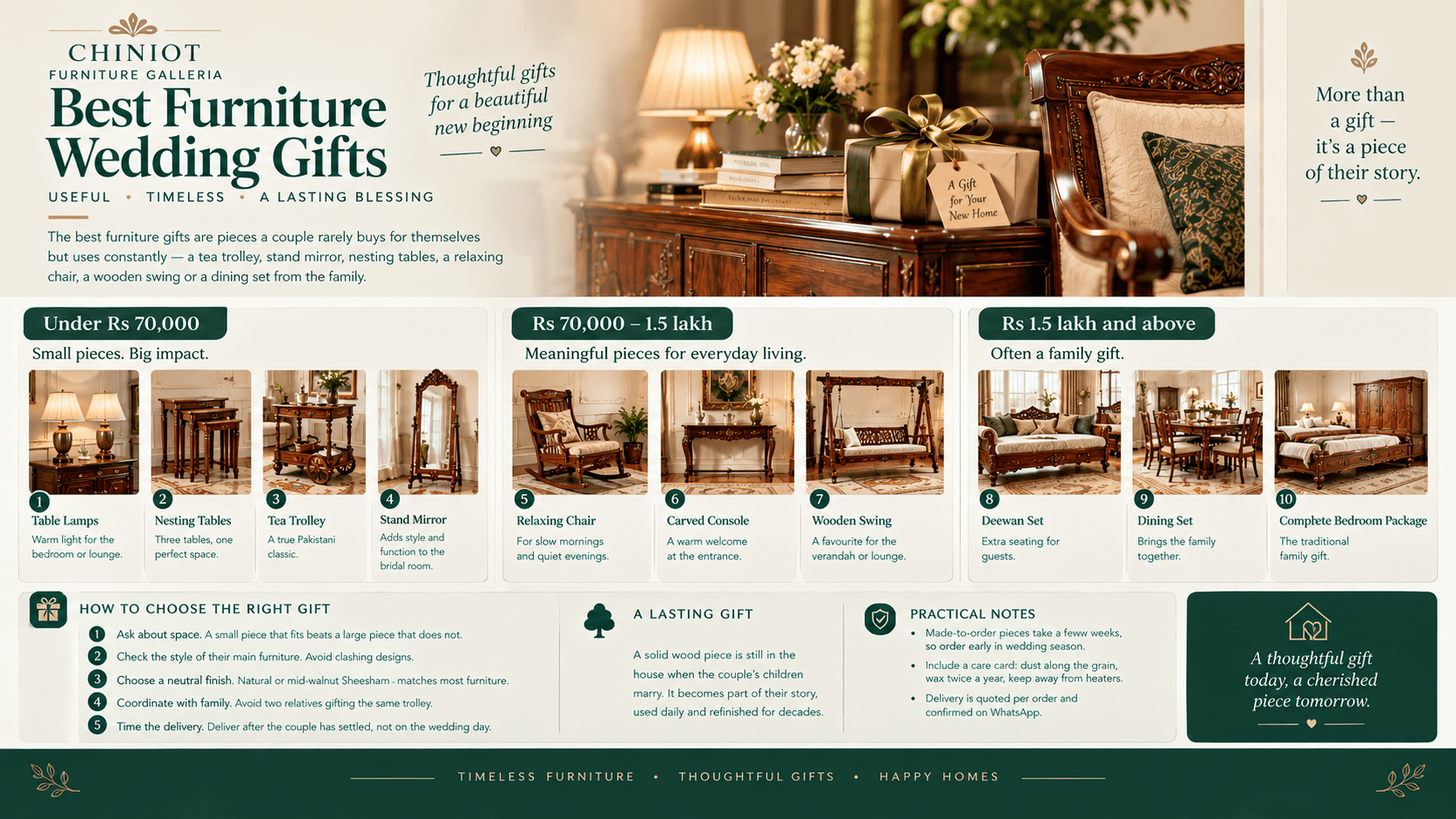
Furniture as a Wedding Gift: 10 Pieces That Are Actually Used
Ten wooden furniture wedding gift ideas for a couple, from Rs 38,000 table lamps to swings and dining sets — plus how to choose a piece that fits their home and style.
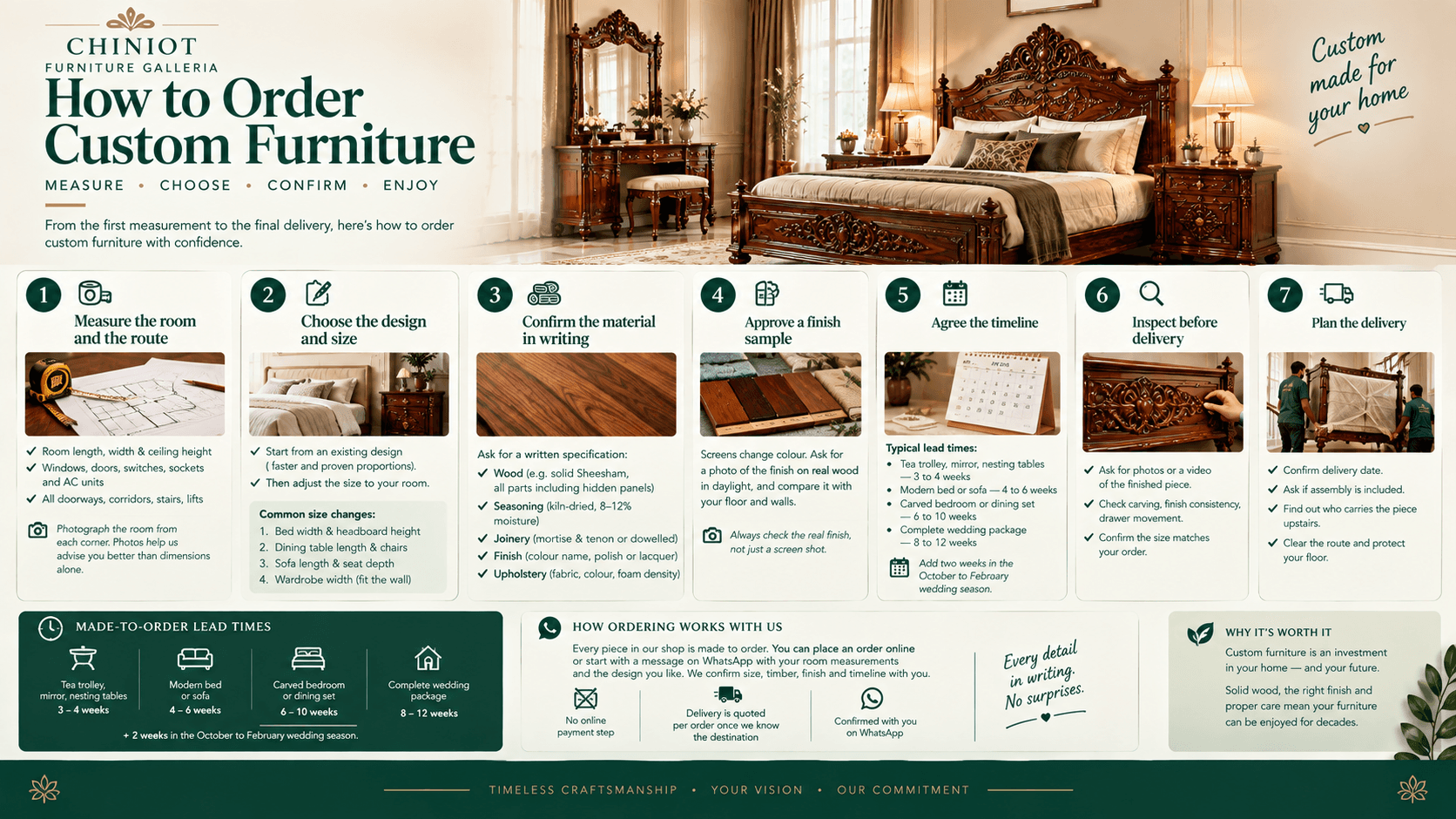
How to Order Custom Furniture in Pakistan: From Measurements to Delivery
A step-by-step guide to ordering made-to-order furniture — measuring, choosing wood and finish, approving the design, lead times, payment milestones, inspection and delivery.